SATURDAY, AUGUST 1, 2026 • 2:00 PM

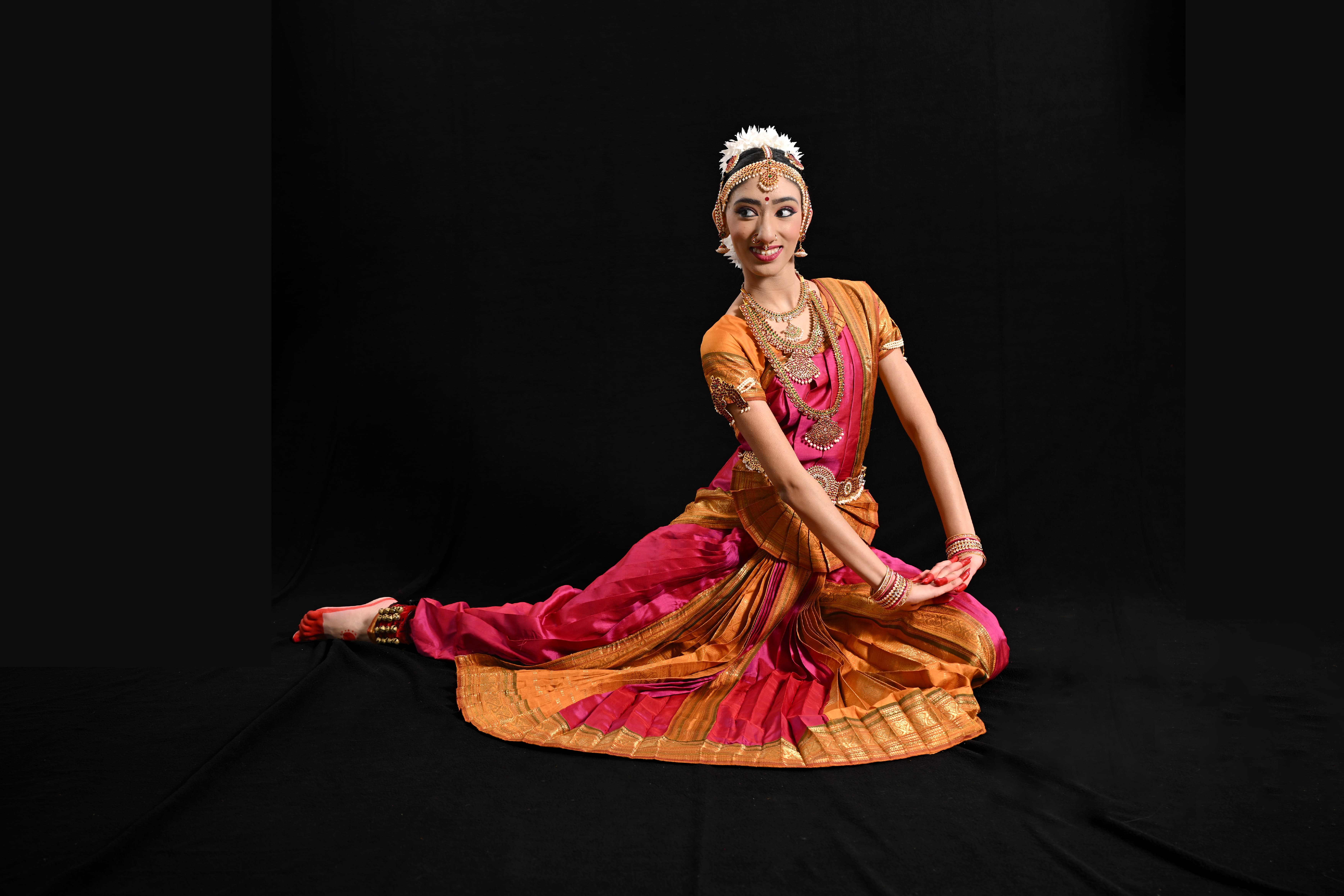
Aarna Parekh

Arangetram

A sacred offering through the timeless art of Bharatanatyam

A humble tribute to her Guru, Firuzi Desai

Follow Aarna’s Journey
ZOELLNER ARTS CENTER • BETHLEHEM, PENNSYLVANIA
August 1, 2026 • 2:00 PM • Zoellner Arts Center, Bethlehem, PA
Indian Traditional or Formal Wear • Dinner to follow
THE ETERNAL ART

The Timeless Tradition of Bharatanatyam

Originating several millenia ago in the sacred temples of Tamil Nadu, Bharatanatyam is one of India's oldest and most revered classical dance forms. Rooted in the sacred text Natya Shastra (Performing Arts), it beautifully blends rhythm, music, and dramatic storytelling. It is a visual language where every movement possesses profound meaning.

A Symphony of Art and Mathematics

Bharatanatyam is far more than physical movement; it is a profound synthesis of architecture, geometry, and expression. The foundation of this art lies in ancient texts like the Natyashastra, which lays out 108 mathematically precise movement patterns. The dancer's geometry on stage—shifting from a deep, perfectly balanced squat (Aramandi) to intricate spatial patterns—is a physical manifestation of these ancient, scientific principles.

The Three Dimensions of Performance

A Bharatanatyam recital is a holistic experience that relies on three core pillars:

  • Nritta: Pure, rhythmic footwork and geometric body movements performed to intricate musical cadences.
  • Nritya: The interpretive aspect where the dancer uses delicate gestures and posture to weave together poetry and melody.
  • Natya: The ultimate expression of storytelling, where the dancer embodies various characters to convey emotion and universal truths.

Through a vocabulary of symbolic hand gestures (Mudras) and expressive facial movements (Abhinaya), the dancer narrates touching incidents of Ithihaasa (history expressed as an epic), devotion, and humanity. It is an art form that captivates the mind, taking both the artist and the audience on a journey of profound spiritual and aesthetic delight.

The Arangetram: A Sacred Milestone

An Arangetram is the glittering culmination of years of rigorous training under the careful guidance of a Guru. The word translates directly to “ascending the stage”. It is a dancer’s dazzling debut — a rite of passage where they transform from a student into a proficient practitioner of this divine art form.

As our dancer takes center stage, adorned in vibrant traditional silks and temple jewelry, they bring to life centuries of history, discipline, and cultural heritage.

We are incredibly honored to invite you to witness this magical evening. Please join us in celebrating our dancer’s dedication, the culmination of countless hours of practice, and the beautiful unfolding of this timeless classical art.

Shiva Nataraja: The Cosmic Dancer

At the heart of Bharatanatyam stands Lord Shiva as Nataraja — the Lord of Dance. In his form as Nataraja, Shiva performs the Ananda Tandava, the Dance of Infinite Bliss, enacting the eternal cosmic cycles of creation (Srishti), preservation (Sthiti), and dissolution (Samhara).

Shiva represents pure consciousness; Shakti is the dynamic creative energy that animates the universe. Every gesture in Bharatanatyam is a participation in this divine rhythm — the Spanda (throb) of consciousness and the Nada (primordial sound).
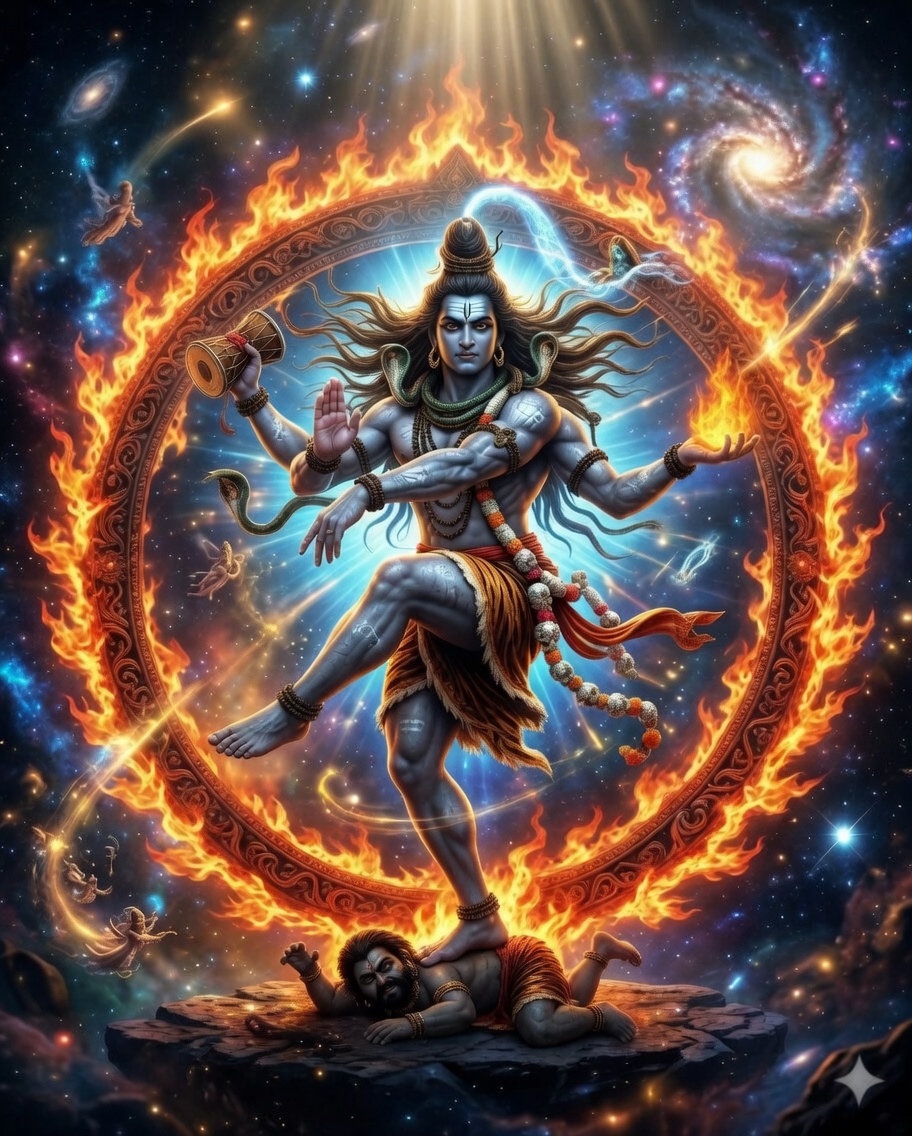
Magnificent cosmic Nataraja performing the Ananda Tandava — damaru, Agni, Abhaya mudra, raised leg, foot on Apasmara, surrounded by flames in a glowing celestial setting

The Origin

In the cosmic silence before time began, creation slumbered as an unstruck sound, waiting for the divine impulse to awaken into being. It is within this sacred void that Bharatanatyam finds its origin, not merely as a dance of human design, but as the visible vibration of the Supreme Consciousness. Tied eternally to Lord Shiva—the primordial guru of all movement—this sacred art form is the physical manifestation of the Ananda Tandava, the Dance of Bliss, performed by Shiva in his majestic form as Nataraja, the King of the Cosmic Dance.

According to the holy tenets of Sanatana Dharma, the universe is not static; it is a continuous, pulsating rhythm sustained by the divine play of the Almighty. When Lord Shiva assumes the form of Nataraja within the golden hall of Chidambaram—the spiritual heart of the universe and the human ether—He dances the Ananda Tandava. This dance is the visual essence of the Panchakritya, the five sacred activities that govern the cosmos: Srishti (creation), Sthiti (preservation), Samhara (destruction), Tirobhava (illusion), and Anugraha (salvation or grace).

Every movement of Nataraja in His Ananda Tandava is an absolute scriptural truth rendered in motion. In His upper right hand, He holds the damaru, the hourglass drum whose rhythmic beats sound the first vibrations of creation, echoing the timeless wisdom of the Vedas. His upper left hand cradles Agni, the sacred fire that consumes and purifies, representing the inevitable transformation of the material world. The lower right hand is upraised in the comforting Abhaya mudra, a divine assurance of protection, whispering to the seeker that there is no need for fear. His left leg, lifted diagonally across His body, points gracefully toward His upraised left foot, signifying Anugraha—the ultimate grant of liberation from the cycle of rebirth. Below Him, His foot treads upon the demon Apasmara, symbolizing the crushing of ignorance, ego, and cosmic delusion.

Bharatanatyam is the direct, earthly lineage of this celestial movement, systematically codified under divine guidance in the ancient Natya Shastra by Sage Bharata. It was conceived as a fifth Veda—the Natya Veda—accessible to all humanity, combining the spiritual essences of pathya (words) from the Rig Veda, gheetam (music) from the Sama Veda, abhinaya (expression) from the Yajur Veda, and rasa (emotion) from the Atharva Veda.

When a dancer steps onto the consecrated stage, they are not merely performing; they are stepping into the microcosm of Chidambaram. The straight lines of the posture mimic the unyielding axis of the universe, while the fluid hand gestures, or mudras, become silent prayers translating the depths of the Upanishads. The rhythmic stamping of the feet against the earth is an echo of Shiva’s footfall, a conscious awakening of the sleeping divinity within the soil and the soul. Through the pristine geometry of Bharatanatyam, the dancer mirrors the Ananda Tandava, transforming the physical vessel into a conduit for the divine, where the boundaries between the seeker, the dance, and the Divine Dancer dissolve into absolute oneness.

Did You Know?

1.

Bharatanatyam is over 2,000 years old — one of the oldest classical dance forms still performed in the world today. Its theoretical foundations are found in the Natya Shastra, a monumental Sanskrit treatise on performing arts composed between 200 BCE and 200 CE.

2.

The name “Bharatanatyam” itself carries deep meaning. It is believed to represent Bhava (emotion/expression), Raga (melody/music), and Tala (rhythm) — the three essential elements that define this art form.

3.

In 2004, the Government of India gifted a magnificent 2-meter bronze statue of Lord Shiva as Nataraja to CERN (the European Organization for Nuclear Research) in Geneva. Scientists have noted striking parallels between Shiva’s cosmic dance and the dynamic behavior of subatomic particles studied at the Large Hadron Collider.

4.

Bharatanatyam was originally performed by Devadasis — women dedicated to temple service — as a sacred offering to the deities, particularly Lord Shiva in his form as Nataraja. It was considered a form of worship and spiritual practice, not merely entertainment.

5.

The dance form nearly disappeared in the early 20th century due to social stigma and colonial policies. It was dramatically revived and elevated to its current respected status largely through the efforts of Rukmini Devi Arundale, who founded the prestigious Kalakshetra Foundation in 1936.

6.

Bharatanatyam is built on an incredibly sophisticated system. The Natya Shastra describes 108 fundamental dance movements (called karanas) and hundreds of hand gestures (mudras) that can convey complex ideas, emotions, and even entire stories without words.

7.

Unlike many dance forms that focus primarily on entertainment, Bharatanatyam is rooted in the ancient Indian philosophy of Rasa — the idea that art should evoke deep emotional and spiritual experiences in both the performer and the audience, ultimately leading to a higher state of awareness.

8.

A single Bharatanatyam performance combines dance, music, theater, poetry, and philosophy. The dancer must simultaneously control intricate footwork, rhythmic precision, expressive facial gestures (abhinaya), and storytelling — making it one of the most demanding classical dance forms in the world.

9.

Bharatanatyam has survived invasions, colonial rule, social reform movements, and modernization — yet it continues to thrive. Today, it is recognized as one of India’s eight classical dance forms and is performed and taught in countries across the globe.

10.

Practicing Bharatanatyam offers remarkable benefits beyond the stage. Dancers develop extraordinary concentration, discipline, physical strength, emotional intelligence, and mindfulness — qualities that have made the art form increasingly popular not just as performance, but as a holistic practice for personal growth.
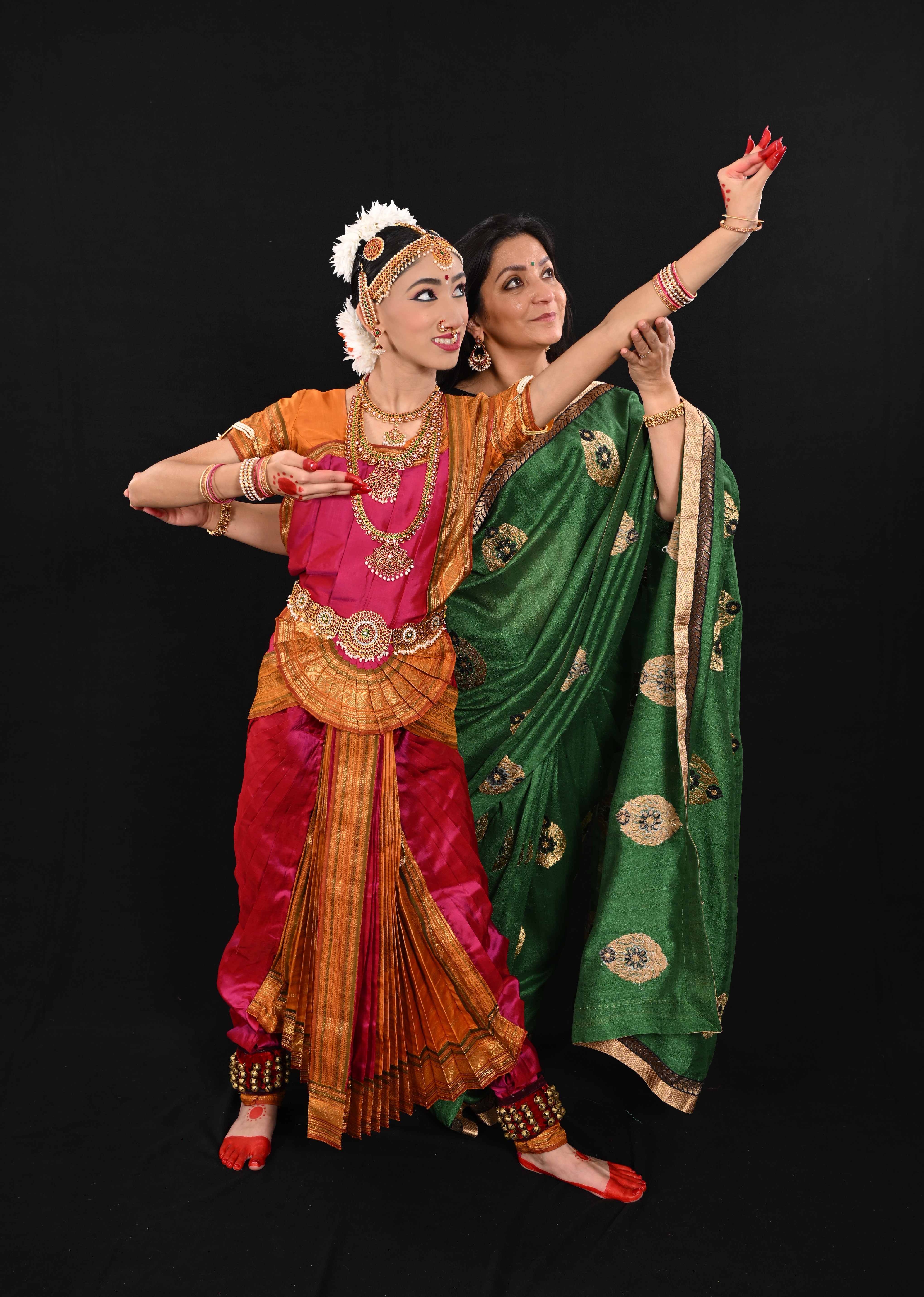
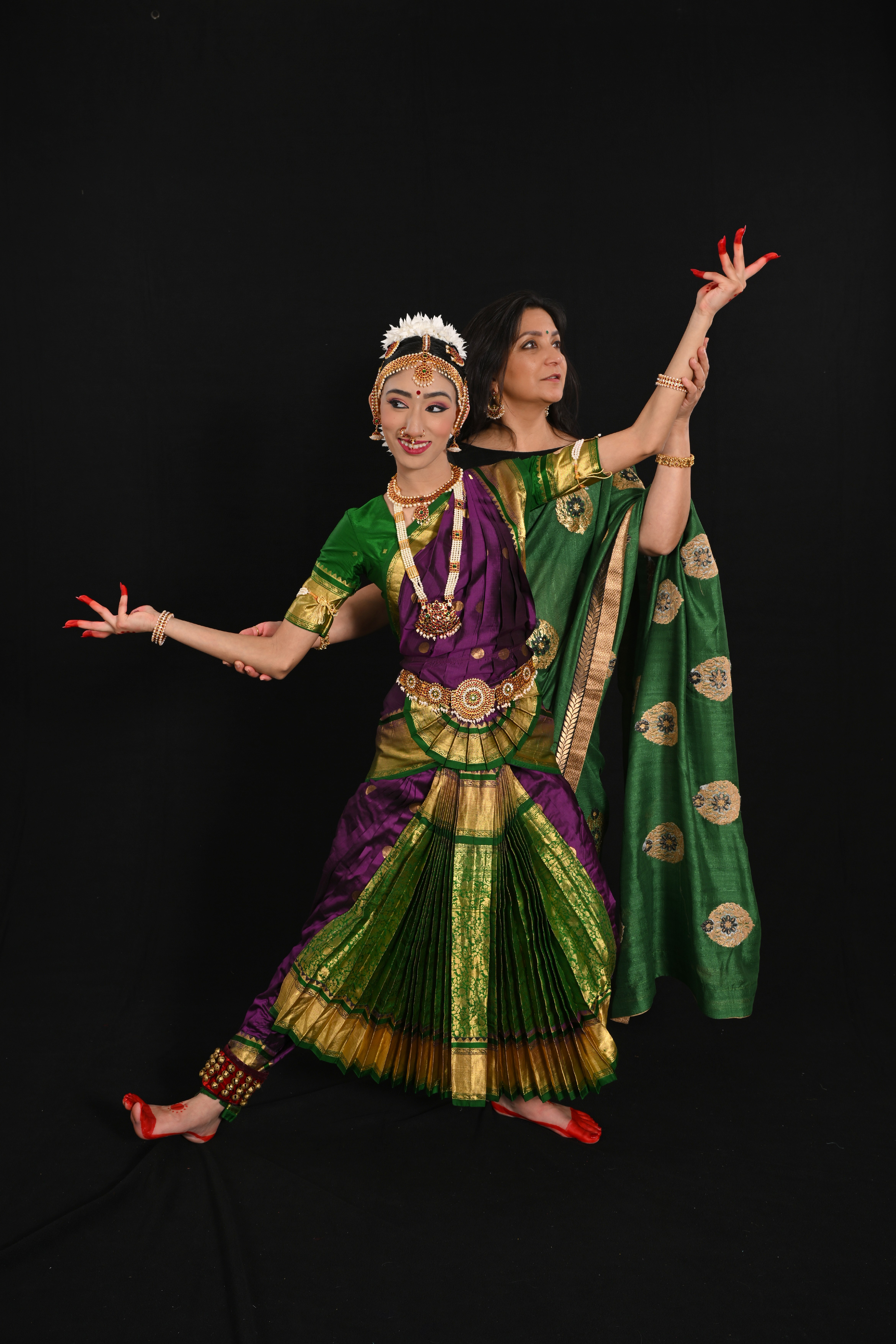
Guru Firuzi Desai with Aarna Guru guiding Aarna
VEDANTA DANCE ACADEMY • LEHIGH VALLEY

Guru Firuzi & Vedanta Dance Academy

Firuzi Desai, founder-director of Vedanta Dance Academy, is a distinguished Bharatanatyam guru, performer, and choreographer, whose work bridges the sanctity of classical tradition with contemporary storytelling. With over two decades of dedicated teaching, Firuzi’s journey in Bharatanatyam began at the tender age of four, rooted deeply in the guru–shishya parampara under the guidance of Nritya Kala Guru Neela Raval, where she was rigorously trained in the Tanjore style of Bharatanatyam in Surat, Gujarat, India.

Committed to mastery and authenticity, she pursued both her Bachelor’s and Master’s degrees in Bharatanatyam, refining her technique, abhinaya, and theoretical depth under the mentorship of Guru Behnaz Todiwala of Utkarsh Dance Academy. This strong classical foundation continues to define her role as a traditional Bharatanatyam guru, dedicated to preserving the integrity, discipline, and spiritual essence of the art form while making it accessible to contemporary audiences.

Since founding Vedanta Dance Academy in 2002, Firuzi has shaped the institution into one of the Valley’s premier centers for classical Bharatanatyam training, producing dancers who are grounded in technique, rhythm, and expressive storytelling. While Bharatanatyam remains at the core of her pedagogy, her choreographic vision also embraces Indian folk traditions, fusion works, and the dynamic energy of Bollywood, allowing students to explore versatility without compromising classical values.

An adjunct professor at Cedar Crest College, Firuzi extends her role as an educator beyond the studio, nurturing academic and artistic excellence. Her commitment as a guru extends to social advocacy through initiatives such as #PositiveSteps, where she uses Bharatanatyam and movement-based narratives to engage with themes of mental health, social equity, and community healing.

A respected cultural ambassador and Bharatanatyam guru, Firuzi has led Vedanta’s participation in esteemed platforms in the Lehigh Valley. Her students’ performances reflect her disciplined training and artistic vision, emphasizing unity, cultural pride, and artistic integrity.

Honored with the Gathering Award by the City of Allentown, Firuzi Desai continues to uphold the timeless legacy of Bharatanatyam, affirming that dance, in the hands of a devoted guru, becomes a powerful dialogue—one that transcends boundaries, nurtures tradition, and fosters deep human connection.

To learn more about Vedanta Dance Academy, Firuzi’s teaching philosophy, upcoming performances, and the vibrant community she has nurtured, we warmly invite you to visit the academy’s official website at www.vedantadanceacademy.com.

Aarna Parekh
THE DISCIPLE • SHISHYA

Aarna: The Shishya

Aarna’s journey in Bharatanatyam began at the age of four and has blossomed into a deep, lifelong passion nurtured by years of dedicated practice. An earnest disciple of Vedanta Dance Academy under the guidance of Guru Firuzi Desai, she has trained with devotion and commitment for over a decade and is honored to present her Arangetram today.

A rising sophomore at Parkland High School, Aarna approaches her academic, artistic, and athletic pursuits with equal dedication and enthusiasm. She is a high-achieving student who consistently earns High Honor Roll while pursuing a rigorous academic curriculum with a particular love for mathematics and biomedical science. Beyond dance, Aarna’s love for the arts extends into music — she plays the piano and has played the clarinet since 4th grade, performing with her school band since middle school. She is also a dedicated swimmer of over ten years, currently training with EMAC and aspiring to join the Parkland Swim Team.

Deeply connected to her cultural roots, this year marks a special dual milestone for Aarna. Alongside reaching this significant landmark in her Bharatanatyam journey, she also celebrates 10 enriching years at Allentown Balvihar. Through this experience, she has developed a strong connection and deep appreciation for her Indian heritage, cultural traditions, and spiritual values. She also regularly volunteers at the Hindu Temple Society, embracing the spirit of seva and community service. This summer, she looks forward to volunteering at St. Luke’s Hospital, further strengthening her commitment to service.

Over the years, her dance journey has taken her to esteemed stages such as Lehigh University’s Zoellner Arts Center and the Allentown Art Museum. She has also performed in the True Dance Challenge, Ten Tiny Dances, Lehigh Fest, and numerous community events under the Vedanta Dance Academy banner.

Aarna is a warm, focused, and well-rounded young individual who approaches every endeavor with enthusiasm, humility, and grace. As she reaches this milestone, she remains deeply grateful for the unwavering support of her family and the invaluable guidance of her guru, who have nurtured her love for dance and learning.

On this auspicious day, Aarna offers her Arangetram as a humble tribute to her Guru Firuzi Desai. With reverence and gratitude, she seeks the blessings of the divine, her teachers, family, and all those gathered, as she takes this meaningful step forward in her artistic journey.

THE FLOW OF THE EVENING

Evening Timeline

A clear guide to the rhythm of Aarna’s Arangetram day.

2:00 PM
Welcome Snacks & Drinks

Guests are invited to arrive, mingle, and enjoy light refreshments.

2:45 PM
Auditorium Doors Open

Seating begins. Please be settled before the performance starts.

3:00 PM
Curtain Raise & Performance

Welcome address, invocation, lighting of the lamps, followed by the full Margam.

≈ 6:00 PM
Dinner Reception

A celebratory dinner follows the conclusion of the performance.

FOR OUR GUESTS

What to Expect

A warm guide for those attending a Bharatanatyam Arangetram, perhaps for the first time.

The Performance

Aarna will present a traditional Margam — the classical sequence of pure and expressive items that forms the heart of a Bharatanatyam debut. The full performance typically lasts between two and a half to three hours.

You will witness a beautiful progression from rhythmic pure dance to deep storytelling, culminating in a joyful Tillana and the final Mangalam.

Audience Etiquette

  • Please silence your phones and refrain from photography or video during the performance.
  • Kindly remain seated throughout the Margam so that the dancer’s concentration and the sacred atmosphere are preserved.
  • Warm applause at the end of each item is most welcome and appreciated.

The Spirit of the Evening

An Arangetram is both a celebration and a sacred offering. It marks the moment a student is presented by her Guru to the community after years of dedicated training.

Your presence is itself a blessing. The evening is offered with reverence to the Divine, to the Guru, and to all those who have supported Aarna’s journey.

After the Performance

Following the final Mangalam and closing reflections, guests are warmly invited to the Dinner Reception.

This is a time for celebration, photographs, and sharing the joy of the occasion with Aarna, her Guru, and the family.

Indian Traditional or Formal Wear is suggested. We are deeply grateful for your presence and support of Aarna’s artistic journey.

THE SACRED MARGAM

Aarna’s Repertoire

A traditional Bharatanatyam Margam presented under the guidance of Guru Firuzi Desai.

Arangetram Program at a Glance — Click any item to jump below

Watch the Digital Invitation

Charities Close to Aarna’s Heart

Aarna is deeply committed to supporting organizations that uplift children, strengthen communities, and promote mental health and well-being in the Lehigh Valley.

Lehigh Valley Reilly Children's Hospital

Provides exceptional, compassionate pediatric care to children across the Lehigh Valley. Supported by the LVHN Office of Philanthropy, the hospital offers specialized medical services, family-centered care, and vital resources that help young patients and their families during difficult times.

United Way of the Greater Lehigh Valley

Mobilizes the caring power of the community to improve lives across the Lehigh Valley. United Way focuses on advancing education, financial stability, and health through strategic partnerships and programs that create lasting, measurable impact.

NAMI Lehigh Valley

The Lehigh Valley chapter of the National Alliance on Mental Illness provides free support, education, and advocacy for individuals and families affected by mental health conditions. NAMI works to reduce stigma, improve access to care, and build a more compassionate community.

Engage & Discover

While enjoying the program, test your knowledge of Bharatanatyam and Aarna’s Arangetram!

Bharatanatyam & Aarna’s Arangetram Quiz

10 fun questions • Takes about 5–7 minutes

Bharatanatyam Wordle

Guess the 5-letter word • 6 attempts

Bharatanatyam Connections

Group the words into 4 categories

Mistakes remaining: 4
A HELPFUL REFERENCE

Glossary of Bharatanatyam Terms

For our guests encountering these classical terms for the first time, here is a concise guide to the key concepts and expressions used throughout this website.

Abhinaya

The expressive dimension of Bharatanatyam, using facial expressions, hand gestures, and body language to convey emotions, narratives, and inner states. It enables the dancer to evoke rasa in the audience, transforming performance into spiritual and emotional communication.

Abhaya Mudra

A sacred hand gesture (mudra) in which the palm faces outward with fingers pointing upward, symbolizing fearlessness, protection, and divine blessing. In Nataraja iconography, it reassures devotees of Shiva’s protective grace.

Agni

The sacred fire held by Nataraja in his upper left hand. It represents transformation, purification, and the destruction of ignorance, signifying the constant renewal and change within the cosmic cycle.

Alarippu

The opening pure dance (nritta) item of a traditional Margam. Literally meaning “flowering,” it introduces the dancer’s basic movements and offers salutations to Lord Nataraja and the audience.

Ananda Tandava

The “Dance of Bliss” performed by Lord Shiva as Nataraja. It represents the five cosmic activities (Panchakritya) and symbolizes the eternal rhythm of creation, preservation, destruction, illusion, and grace.

Anugraha

Divine grace or salvation; one of the five cosmic functions (Panchakritya) of Nataraja. Symbolized by the raised left leg and foot, it represents liberation from the cycle of birth and death.

Apasmara

The dwarf demon of ignorance, ego, and illusion crushed under Nataraja’s right foot. Also called Muyalaka, he symbolizes the triumph of divine knowledge over delusion.

Arangetram

A dancer’s debut solo performance, marking the formal completion of rigorous training. Literally “ascending the stage,” it represents the transition from student to performer in the guru-shishya tradition.

Bharatanatyam

One of India’s eight classical dance forms, originating in Tamil Nadu. It combines nritta (pure dance), nritya (expressive dance), and natya (dramatic dance), rooted in the Natya Shastra and dedicated to Lord Shiva as Nataraja.

Chidambaram

The sacred temple town in Tamil Nadu considered the spiritual heart of the universe. It is where Shiva performs the Ananda Tandava as Nataraja, and the site after which the cosmic stage in Bharatanatyam is modeled.

Damaru

The small hourglass-shaped drum held by Nataraja in his upper right hand. Its rhythmic beats represent the primordial sound that initiates creation and the eternal pulse of the universe.

Guru-Shishya Parampara

The traditional Indian teacher-disciple lineage through which knowledge is transmitted orally and experientially. In Bharatanatyam, it preserves the purity and spiritual depth of the art across generations.

Ithihaasa

A Sanskrit term (from iti-ha-āsa, “thus indeed it was”) that means history expressed as an epic. In the Indian tradition, Ithihaasa refers to sacred narrative accounts that combine historical memory, moral teaching, and spiritual wisdom. The two great works accepted as Ithihaasa are the Ramayana and the Mahabharata. These epics are regarded not merely as stories but as true accounts that illuminate dharma and the human condition.

Margam

The traditional sequence of items in a Bharatanatyam recital, progressing from pure dance (nritta) to expressive storytelling (nritya) and concluding with a joyous finale, guiding both dancer and audience through a complete artistic and spiritual journey.

Mudra

Symbolic hand gestures used in Bharatanatyam to convey specific meanings, deities, emotions, or objects. Derived from the Natya Shastra, mudras function as a precise visual language.

Natya

The dramatic or theatrical aspect of Bharatanatyam, combining dance, music, and storytelling. It is one of the three core elements (along with nritta and nritya) and draws from the Natya Veda.

Natya Shastra

The ancient Sanskrit treatise on performing arts attributed to Sage Bharata. It is the foundational text for Bharatanatyam, codifying movement, expression, music, and aesthetics into a comprehensive system.

Natya Veda

The “fifth Veda” created by combining elements from the four Vedas. It was designed to make spiritual knowledge accessible to all through dance, drama, and music.

Nritta

Pure dance in Bharatanatyam, focused on rhythm, geometry, and technical precision without storytelling. It emphasizes the beauty of movement itself and forms the foundation of the Margam.

Nritya

Expressive dance that combines movement with abhinaya to convey emotions and narratives. It bridges pure technique (nritta) and dramatic storytelling (natya).

Panchakritya

The five cosmic functions performed by Nataraja: Srishti (creation), Sthiti (preservation), Samhara (destruction), Tirobhava (illusion), and Anugraha (grace). These govern the continuous cycle of the universe.

Pushpanjali

An invocatory item in which the dancer offers flowers and prayers to the divine and the stage. It sets a devotional tone and prepares both performer and audience for the sacred performance.

Rasa

The aesthetic and emotional essence experienced by the audience. In Bharatanatyam, the dancer evokes specific rasas (such as Shringar – love and beauty) to create a profound spiritual and emotional connection.

Samhara

Destruction or dissolution; one of the five cosmic activities (Panchakritya) represented in Nataraja’s dance. It signifies the necessary ending that allows for renewal and transformation.

Shishya

A disciple or student in the traditional guru-shishya parampara. The shishya receives knowledge through devoted practice and guidance, eventually becoming a custodian of the tradition.

Shringar Rasa

The rasa of love, beauty, and divine romance. It is one of the most prominent emotional flavors in Bharatanatyam, often expressed through abhinaya in items such as Varnam and Padam.

Srishti

Creation; the first of the five cosmic functions (Panchakritya) enacted by Nataraja. Symbolized by the damaru, it represents the emergence of the universe from divine rhythm.

Sthiti

Preservation or sustenance; one of Nataraja’s five cosmic activities. It maintains cosmic order and balance within the continuous cycle of creation and dissolution.

Tandava

A vigorous, powerful form of dance associated with Lord Shiva. The Ananda Tandava is the blissful cosmic dance that reveals the fundamental rhythms and truths of existence.

Tillana

The joyful, rhythmic conclusion of a traditional Margam. It features intricate footwork and teermanams performed in three speeds, celebrating pure dance and leaving the audience uplifted.

Tirobhava

Illusion or concealment; one of the five cosmic functions (Panchakritya). It represents the veiling of ultimate reality, allowing the play of the universe to unfold.

Varnam

The central and most elaborate item of a Margam. It combines complex nritta with expressive abhinaya, often exploring themes of devotion (especially Shringar Rasa) and showcasing the dancer’s full technical and emotional range.